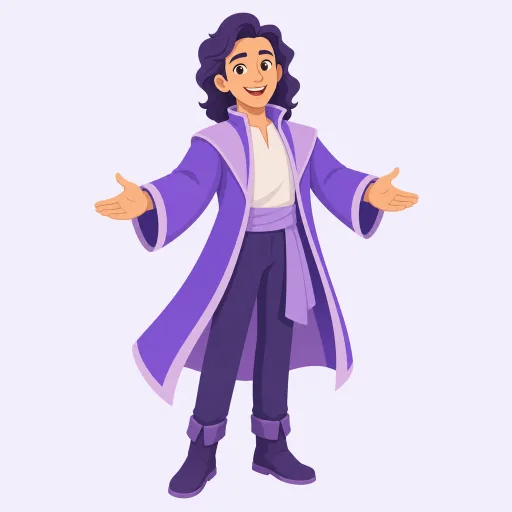
The Protagonist (ENFJ)
ENFJ
MBTI type breakdown

The Protagonist (ENFJ)

A natural guide who brings people together, sees the potential in others, and gives them the push they need.

Start the MBTI test

Sample building in progress

There are 0 same-language results so far. Percentages and rarity appear at 30 to avoid misleading small-sample claims.

ENFJs tend to become the connector in any class, club, or team. You're the one who notices when someone's been off lately, and you instinctively know how to rally a group around a shared goal. You're warm and genuinely inspiring, and you truly want the people around you to thrive.

Your core traits

You're expressive and deeply empathetic, able to read the mood of a room and lift it. You value harmony and growth, and you'll pour real energy into helping others. You need to feel needed, and you tend to treat other people's progress as your own responsibility.

Why you're an ENFJ

Extraversion (E) means you recharge through interaction and connection. Intuition (N) lets you see people's potential and the bigger picture. Feeling (F) means you decide based on people's emotions and values. Judging (J) gives you a love of organizing, guiding, and steering things in a positive direction. Put it all together and you get a leader who understands people and knows how to lead them.

Your strengths

  • Bringing people together: you can unite a group and move them toward a shared goal.
  • Empathetic communication: you make people feel seen and encouraged.
  • Drawing out potential: you have a gift for spotting and nurturing what others are capable of.

Blind spots and growth

You're so used to taking care of everyone that you overlook your own exhaustion, and you may even carry other people's emotions on your shoulders. You can also care too much about what others think, which makes it hard to say no. Practice letting yourself off the hook from always being "put together," and start putting your own needs into the equation too. Your relationships will become more genuine and far more lasting for it.

Love and relationships

You give a lot, and you hope to be cared for just as much. Your biggest fear is being overlooked or watching a relationship grow cold. You usually show love through attentive care and constant encouragement. Remember: you need to be looked after too, and being brave enough to voice your own vulnerability is what keeps you from burning out in the giving.

Career directions that suit you

ENFJs thrive in fields built around guiding and connecting with people: teaching, training, HR, team leadership, PR, marketing, counseling, community building, nonprofit work, and event planning. You shine in environments that value people and let you make an impact. Roles that mean working alone for long stretches with little human contact aren't a good fit.

In daily life

In settings where people are more reserved and not used to expressing emotion openly, your warmth can sometimes catch others off guard and leave them unsure how to respond. You also tend to take on too much in the name of "doing what's best for everyone." Learn to turn that care back on yourself too, and set some boundaries while you're at it. That's how your warmth stays bright for the long haul.
Careers & work environments

  • Teacher, trainer, or educator — Fe gives ENFJs a natural read on a room's emotional temperature, while Ni spots each student's long-term potential; together that makes mentoring growth feel effortless.
  • HR, organizational development, or team coach — smoothing out interpersonal friction, resolving conflict, and rallying team morale isn't just a skill for ENFJs, it's closer to a reflex.
  • Counselor, social worker, or career coach — deep one-on-one work helping someone see their own path combines Fe's empathetic connection with Ni's intuitive read on future possibilities.
  • Nonprofit leader or social advocate — rallying people around a cause takes the kind of magnetic presence and vision-driven storytelling ENFJs bring naturally.
  • PR, brand marketing, public speaking, or hosting — standing in front of a room, holding attention, and moving people with a story gives ENFJ's expressive, persuasive energy a proper outlet.
  • Management or team leadership — ENFJs tend to lead by making sure everyone is doing okay first and talking performance second, and that people-first style often builds unusually loyal teams.
  • Healthcare or nursing-adjacent roles — work that demands both clinical judgment and genuine warmth lets ENFJs solve problems while also providing real emotional reassurance to patients.

ENFJs tend to burn out fastest in environments with little human interaction, long stretches of solo work, or rules so rigid there's no room to adjust to a person's actual situation. Being forced to treat everyone with the same cold, standardized process — or going long stretches without seeing any positive impact from their effort — drains an ENFJ fast.

Famous ENFJs

The names below are informal, community-typed examples based on public persona — not verified or clinical assessments, just fun points of comparison.

  • Oprah Winfrey — often cited by typology communities as ENFJ, her strong empathetic presence on air and her knack for drawing out guests' genuine feelings are seen as a classic display of Fe.
  • Martin Luther King Jr. — widely discussed as an ENFJ archetype, his vision-driven speeches that rallied crowds around a cause are often read as Ni's long-range vision paired with Fe's magnetic pull.
  • Barack Obama — frequently typed by communities as ENFJ, his habit of weaving personal stories into a larger collective ideal in public speeches is often used as an example.
  • Mahatma Gandhi — a commonly cited ENFJ candidate, known for driving social change through moral appeal rather than force, fitting the ENFJ emphasis on values-driven consistency.
  • Taylor Swift — often typed as ENFJ in fan and typology discussions, cited for her closely felt connection with fans and the way she looks after people around her.
  • Dumbledore (Harry Potter) — commonly held up as a fictional ENFJ archetype, seeing each student's hidden potential while quietly running a much longer-term plan.
  • Wonder Woman (Diana) — in some portrayals typed as ENFJ, for her strong sense of justice, protective instinct toward others, and natural, magnetic leadership.
ISTP
All four letters reversed

What is the opposite of ENFJ?

By reversing the four MBTI preference letters, the opposite of ENFJ is ISTP. Opposite does not mean incompatible; it highlights differences in energy, information, decisions, and everyday structure.

In-depth report · $4.99

Unlock the full in-depth report

The full report will cover work style, relationship patterns, stress responses, and action tips.

  • Jungian 8-function cognitive stack (how your mind actually works)
  • Career deep-dive: roles that fit, work style, and pitfalls to avoid
  • Love & relationships: patterns, friction points, and compatibility
Unlock the full report · $4.99
Compatibility

The Protagonist (ENFJ) compatibility

See how The Protagonist (ENFJ) matches with each type in relationships and daily life.

Comparisons

The Protagonist (ENFJ) vs other types

See the key differences between The Protagonist (ENFJ) and each type, to help you tell which one you're more like.

Share your result

Share your personality type with friends and see how you match.

Other types

Keep comparing other types