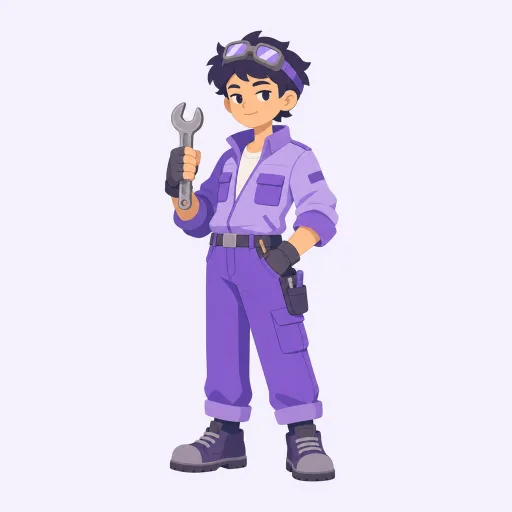
When something breaks, you rarely launch into theory. You take it apart, test it, and tinker until it works. You have a sharp instinct for tools, processes, physical feel, and technical detail, and you stay especially cool and dependable in moments that call for a split-second call.
Your core traits
You are practical, independent, and efficiency-minded, and you trust what gets *done* over what gets *said*. You dislike being boxed in by rules and like keeping room to move on your own terms. You may seem quiet on the surface, but when it comes to getting things done right, you have a clear method of your own.
Why you're an ISTP
Introversion (I) means you need solitude and autonomy. Sensing (S) keeps you grounded in the concrete, the present, and the practical. Thinking (T) means you judge by logic and usefulness. Perceiving (P) keeps you flexible, quick to adapt, and resistant to being locked into a plan. Put it together and you get a calm, nimble, problem-solving doer.
Your strengths
- Hands-on skill: you excel at breaking a problem down and actually fixing it.
- Grace under pressure: you stay level-headed when things get tense or change fast.
- Independence: you get things done without anyone looking over your shoulder.
Blind spots and growth
You explain your thinking so rarely that others can misread you as cold or checked-out. Your love of freedom can also lead you to dodge long-term commitments. Practice spelling out your boundaries and what you actually care about, and lean into a little more communication on the things that matter. It puts the people closest to you at ease.
Love and relationships
You need freedom and trust, and you bristle at being interrogated or guilt-tripped. You show love through action: fixing things, solving problems, simply being there. Learning to put your feelings into words, rather than answering with silence, lets the people you care about get closer to the real you.
Career directions that fit
ISTPs thrive in fields that reward hands-on work and technical judgment: engineering, mechanics, IT and security, skilled trades, aviation, firefighting, surgery, product development, data analysis, and anything sports-related. You shine in environments where you can build, work autonomously, and solve real problems. Roles heavy on paperwork, rigid rules, or constant socializing tend to drain you.
In daily life
In group settings that prize visible agreement and chiming in, your quiet can be mistaken for not being a team player. But your composure and practical skill often make you the most reliable person in the room when it counts. Make a habit of sharing your ideas without being asked and showing up a bit more in the group, and the value you bring will be far easier for others to see.