Overview
ENFJ and ENTJ get confused for a practical reason: both are extroverted, intuitive, and judging types who speak with structure, carry visible drive, and radiate "natural leader" energy the moment they walk into a room. On paper, their profiles look nearly identical. But watch how each one decides something, and the difference shows up fast. ENFJ's default question is "is this good for the people involved, and for the relationships here?" ENTJ's default question is "does this actually work, and does it move us toward the goal?" One leads with people, the other leads with outcomes — that is the core distinction.
Cognitive function differences
ENFJ runs on Extraverted Feeling (Fe), Introverted Intuition (Ni), Extraverted Sensing (Se), and Introverted Thinking (Ti). Dominant Fe makes ENFJ naturally attuned to group mood, other people's emotional states, and interpersonal harmony — and inclined to actively manage and smooth it. The auxiliary Ni adds a pull toward long-term meaning and where things are heading, so ENFJ often seems to intuitively "read" what a group of people actually needs. ENTJ runs on Extraverted Thinking (Te), Introverted Intuition (Ni), Extraverted Sensing (Se), and Introverted Feeling (Fi). Dominant Te makes ENTJ naturally inclined to organize the external world — setting priorities, building systems, chasing efficiency and measurable results. The auxiliary function is also Ni, feeding intuitive judgment about trends and long-range strategy. So the two types share the same auxiliary function, Ni — which is exactly why both come across as visionary, able to think years ahead, and impatient with trivial detail. What actually separates them is the dominant function: ENFJ uses Fe to manage *people*, ENTJ uses Te to manage *outcomes*. Their fourth functions are also flipped — ENFJ's least-developed function is typically Ti (introverted logic), while ENTJ's least-used and most-neglected function is Fi (introverted feeling).
How ENFJ comes across
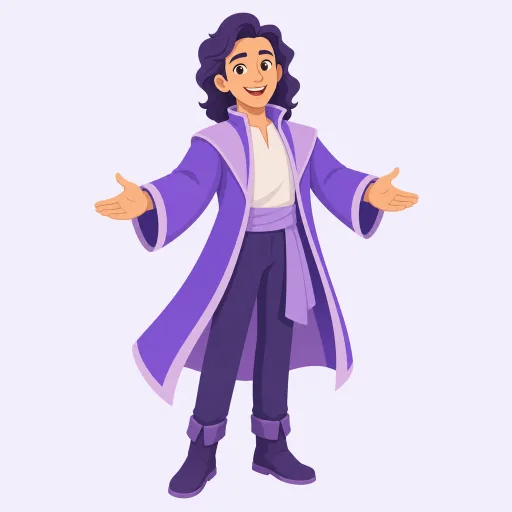
ENFJ speaks with an instinctive read on how a sentence will land emotionally on the listener. The tone is usually warm and encouraging — checking in on how people are doing, remembering small details, offering affirmation mid-conversation. Their energy comes from interacting with others, especially moments where they feel they've helped or improved the mood in the room. First impressions of ENFJ tend to be warmth, charisma, and an uncanny ability to read the room — sometimes noticing something is wrong before anyone says a word.
How ENTJ comes across
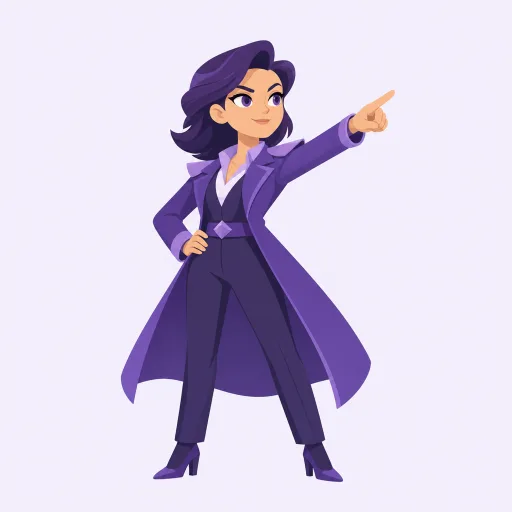
ENTJ tends to get straight to the point, with a decisive tone and a fast pace, focused on "is this clear, and what's the next step." Their energy comes from moving things forward and seeing tangible results. First impressions of ENTJ tend to be confidence, take-charge presence, and directness — in a meeting they'll often start assigning tasks or challenging weak logic almost immediately. This isn't a lack of care for people; it's just that ENTJ tends to express care by solving the problem rather than sitting with the feelings first.
Where they each shine
- ENFJ shines when a team needs morale, conflict needs defusing, or everyone in the room needs to feel seen — onboarding new members, mediating friction, moving an audience with a speech.
- ENTJ shines when a decision needs to happen fast, a system needs building, or a vague goal needs to become an executable plan — firefighting a project, negotiating, designing processes and KPIs.
- ENFJ tends to ask first "how will everyone feel about this decision"; ENTJ tends to ask first "is there a logical gap here, and can this actually be executed." Both lead — but from opposite starting points.
Common mix-ups
- Running a meeting: both may naturally take charge, but ENFJ spends energy making sure everyone gets a chance to speak and notices who's being left out, while ENTJ keeps a tight grip on the agenda and pulls the discussion back on track without necessarily tracking speaking order fairness.
- Giving feedback or criticism: ENFJ usually softens the delivery, leads with what's working, then eases into the problem, mindful of how it lands. ENTJ tends to name the problem directly, believing bluntness is more efficient than diplomacy, even if it comes across as sharp.
- Long-term planning: both are visionary (thanks to shared Ni), which is exactly why they get mistaken for each other. The difference is that ENFJ's vision usually centers on "what this group of people could become together," while ENTJ's vision centers on "what this system or organization could achieve" — one is people-centered, the other outcome-centered.
Careers and work style
Facing the same project, ENFJ tends to check first whether team morale and role assignments let everyone use their strengths, then moves to deadlines; ENTJ tends to check first whether the timeline and resource allocation make sense, then handles staffing. ENFJ often gravitates toward education, HR, counseling, nonprofits, and public relations — fields built on frequent interpersonal contact, empathy, and persuasion. ENTJ often gravitates toward management consulting, entrepreneurship, operations, law, and finance — fields that reward fast decisions, risk tolerance, and building systems. Both can end up in leadership roles, but ENFJ-style leadership tends to get described as "warm guidance," while ENTJ-style leadership tends to get described as "efficient command." Under pressure, ENFJ is more likely to stall a hard decision out of concern for how it affects people; ENTJ is more likely to trigger pushback by overlooking team morale.
Which one are you more like?
- If your first instinct before a decision is "how will people feel about this, and could anyone get hurt," you're likely closer to ENFJ.
- If your first instinct before a decision is "how efficient is this, and will it actually hit the goal," you're likely closer to ENTJ.
- If your default when giving advice is to say "I understand how you feel" first, that leans ENFJ; if your default is to say "here's what you should do," that leans ENTJ.
- If you often catch yourself afterward thinking "was I too blunt, did I hurt someone," that's ENTJ's less-developed Fi surfacing. If you often catch yourself thinking "was I too worried about feelings, did I fail to say what actually needed saying," that's ENFJ's less-developed Ti surfacing.
FAQ
Are ENFJ and ENTJ similar?
On the surface, yes — both are extroverted, decisive, visibly driven, and forward-looking, which is exactly why they get confused. But that's just what the four letters suggest as a tendency. Whether a real person actually behaves like a "typical ENFJ" or "typical ENTJ" depends on upbringing, culture, context, and personal maturity. MBTI offers a framework for self-reflection, not a precise scientific classification of who someone is — treat it as a starting point, not a label to lock in.
What's the single biggest difference between ENFJ and ENTJ?
In theory, it's the dominant function: ENFJ leads with Extraverted Feeling, prioritizing interpersonal harmony and how people feel; ENTJ leads with Extraverted Thinking, prioritizing logical efficiency and measurable outcomes. In practice, how much this actually shows up depends on the individual — two people both labeled ENFJ or both labeled ENTJ can behave very differently day to day. The type is a starting point for understanding yourself, not the final word.