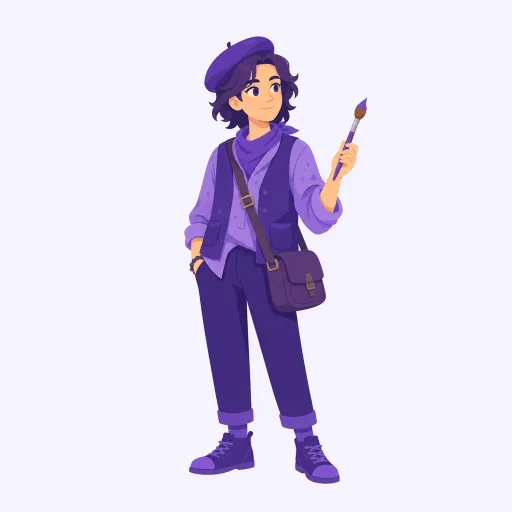
The Adventurer (ISFP)
ISFP
MBTI type breakdown

The Adventurer (ISFP)

A sensitive soul who values beauty and freedom, and protects what's real through action rather than words.

Start the MBTI test

Sample building in progress

There are 0 same-language results so far. Percentages and rarity appear at 30 to avoid misleading small-sample claims.

ISFPs are finely tuned to atmosphere, texture, and the emotional state of the people around them. You probably aren't one for grand declarations, but you express yourself quietly and unmistakably through your work, the way you dress, the food you make, or simply by being there for someone. What matters to you is how something genuinely feels in the moment, and you can't stand being boxed in or pressured.

Your core traits

You're gentle, aesthetically attuned, and deeply committed to freedom and sincerity. You live in the present and savor concrete pleasures: a really good meal, the right song at the right time, a space that feels comfortable. You don't go looking for arguments, but when it comes to the values you actually care about, you're surprisingly firm.

Why you're an ISFP

Introversion (I) means you need quiet and time alone to recharge. Sensing (S) keeps you anchored in the present, attentive to sensory detail. Feeling (F) means you judge by values and how things feel rather than cold logic. Perceiving (P) keeps you open, flexible, and resistant to being tied down by rigid rules. Put it all together and you get someone gentle, genuine, and fully alive in the moment.

Your strengths

  • Aesthetic sense: a natural eye for beauty and mood.
  • Empathy: you pick up on how others are really doing, often before they say a word.
  • Authenticity: you stay true to what you feel and won't fake it to please the room.

Blind spots and growth

When you run into pressure or criticism, your instinct is to retreat. On the surface you stay calm, but inside you've already shut the door. Because you dislike conflict, you also tend to bottle things up. Try naming what you feel earlier and setting clear boundaries. That's how you give people a real chance to understand you and get close.

Love and relationships

You need your choices and your own pace to be respected, and you bristle at being pushed into someone else's rhythm. You show love through attentive, thoughtful presence. Learning to voice discomfort as it happens, instead of quietly absorbing it, will make your relationships healthier and far more lasting.

Career directions that fit

ISFPs thrive in fields that draw on aesthetic sense and authenticity: design, photography, art, cooking, beauty, music, craft, film and video, interiors and fashion, anything involving animals, and care or wellness work. You shine in environments that let you create freely and that value feeling and taste. High-pressure, rigid roles, or jobs that force you to act against your values, will drain you.

In daily life

In a world that prizes stability and steady paychecks, your pull toward beauty and freedom isn't always understood. People may mistake your quiet for indifference or your flexibility for a lack of ambition. But that very sensitivity is what lets you create things that genuinely move people. Learn to turn your talent into something tangible others can see, and protect the pace that keeps you well, and your authenticity will speak for itself.

Careers & work environments

  • Artist / illustrator / photographer — dominant Fi gives ISFPs a strong internal sense of whether something "feels right," while Se makes them acutely sensitive to color, texture, and the beauty of the present moment.
  • Chef / pastry chef — Se lets ISFPs enjoy working hands-on with ingredients through direct sensory feedback, while Fi keeps them focused on whether the food genuinely reflects the flavor and feeling they want to express.
  • Hairstylist / stylist / tattoo artist — these roles combine immediate hands-on feedback with aesthetic expression, matching an ISFP's natural preference for creating with their hands and senses rather than explaining theory.
  • Veterinary assistant / animal care worker — Fi gives ISFPs deep empathy for creatures who can't speak for themselves, while Se keeps them quick and steady under the physical demands of hands-on care.
  • Physical therapist / massage therapist / sports coach — this work requires reading the body in real time and adjusting on the spot, which suits an ISFP's learn-by-doing rhythm.
  • Freelance designer / musician — Fi needs room to work according to personal values and pace, and freelance flexibility lets ISFPs avoid suppressing genuine feelings just to fit someone else's rules.
  • Landscape / garden designer — combines a sharp intuitive feel for natural beauty with the physical, hands-in-the-dirt nature of the work, satisfying both inner values and outer sensory experience at once.

By contrast, rigid, rule-heavy environments with constant status meetings, or workplaces that demand suppressing personal style to fit a corporate template, tend to feel suffocating to ISFPs. Being asked to explain a full theory before being allowed to just try something also drains an ISFP, since they think best through present-moment experience and direct feeling rather than abstract argument.

Famous ISFPs

The people and characters below are informal examples that typology communities have repeatedly discussed as ISFP based on public persona — not clinical diagnoses or verified assessments.

  • Michael Jackson — often typed as ISFP, showing a deeply personal sense of aesthetics and physical expression on stage while being described as quiet and emotionally private off it.
  • Rihanna — widely cited by typology communities as ISFP, with a highly individual sense of music and fashion and a public style that reads as instinctive rather than calculated.
  • Bob Dylan — frequently discussed among typology fans as ISFP, writing from raw, in-the-moment feeling while keeping a low-key, label-resistant public persona.
  • Avril Lavigne — commonly typed as ISFP, with music and image built around authentic self-expression and a visibly rule-averse, go-with-the-feeling attitude.
  • Bruce Lee — often mentioned in typology discussions as ISFP, treating martial arts as a fusion of present-moment physical sense and inner conviction, valuing direct practice over talk.
  • Aragorn (The Lord of the Rings) — a frequently cited fictional ISFP, understated and physically capable, acting on in-the-moment instinct rather than long deliberation.
  • Arya Stark (Game of Thrones) — often typed as ISFP in character discussions, fiercely independent and led by her own values, solving problems through action rather than words.
  • Patrick Star (SpongeBob SquarePants) — sometimes typed half-jokingly as ISFP by typology communities, easygoing and fully present in the moment, largely indifferent to outside rules or expectations.
ENTJ
All four letters reversed

What is the opposite of ISFP?

By reversing the four MBTI preference letters, the opposite of ISFP is ENTJ. Opposite does not mean incompatible; it highlights differences in energy, information, decisions, and everyday structure.

In-depth report · $4.99

Unlock the full in-depth report

The full report will cover work style, relationship patterns, stress responses, and action tips.

  • Jungian 8-function cognitive stack (how your mind actually works)
  • Career deep-dive: roles that fit, work style, and pitfalls to avoid
  • Love & relationships: patterns, friction points, and compatibility
Unlock the full report · $4.99
Compatibility

The Adventurer (ISFP) compatibility

See how The Adventurer (ISFP) matches with each type in relationships and daily life.

Comparisons

The Adventurer (ISFP) vs other types

See the key differences between The Adventurer (ISFP) and each type, to help you tell which one you're more like.

Share your result

Share your personality type with friends and see how you match.

Other types

Keep comparing other types